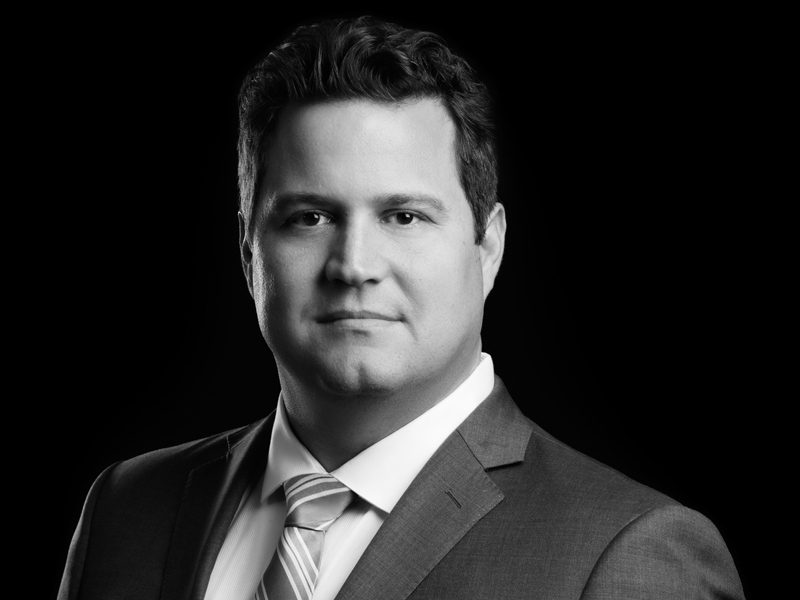
John W. Downing represents both patent owners and accused infringers in high-stakes patent litigation and post-grant proceedings, with a particular focus on coordinated district court and PTAB strategy.
John has extensive experience leading multi-defendant litigation campaigns and parallel inter partes review proceedings. He has served as lead strategist and trial counsel in matters spanning the automotive, financial services, and multimedia industries, including representations of prominent patent owners such as Intellectual Ventures and Nokia. His work includes developing and executing litigation strategy, leading PTAB proceedings, drafting dispositive and merits briefs, and managing large-scale enforcement campaigns through resolution.
He also represents leading technology companies in defending against patent infringement claims in district courts and before the PTAB, including companies such as Google, Adobe, and ASUS. His defense work includes developing invalidity and non-infringement strategies, leading inter partes review proceedings, and coordinating parallel litigation across multiple forums. He has significant experience drafting dispositive motions and PTAB filings, and integrating technical and legal defenses to achieve early case resolution. His experience on both the plaintiff and defense sides provides a strategic perspective that informs all phases of litigation and post-grant proceedings.
John played a central role in the development of one of the PTAB’s most significant precedents governing discretionary denial of inter partes review. He drafted the briefing that led to the Board’s precedential decision in Apple Inc. v. Fintiv, Inc., which established the Fintiv rule framework for discretionary denial based on parallel district court proceedings. The Fintiv decision continues to shape PTAB institution practice and strategy today.
.
Work Highlights
- Uber in securing dismissal of a patent infringement case alleging that Uber’s user application infringed Halio Technologies’ automated dispatch and payment system patent.
- Google in securing summary judgment based on non-infringement and further granting Google’s motion monetary sanctions in a patent infringement suit brought in the Southern District of Texas by SuperSpeed Software, alleging that “Google Docs” and “Google Drive” infringed two data access patents that SuperSpeed incorporated into software used to accelerate the performance of computers linked to a shared-disk network.
- Fintiv in defeating Apple’s motion to transfer venue of Fintiv, Inc. v. Apple Inc. from the Western District of Texas to the Northern District of California. The complaint in the action alleges that Apple Wallet and the Apple Watch infringe Fintiv’s patent relating to the management of virtual cards stored on mobile devices.
- Google in successfully securing a complete dismissal in a six-patent infringement case brought by Data Engine Technologies in the District of Delaware. Data Engine alleged that Google Sheets infringed patents which purportedly covered the Quattro Pro for Windows® spreadsheet program sold by Borland Software Corporation in the 1990s. The court found that the asserted claims were directed to patent-ineligible subject matter and thus invalid, and granted Google’s motion to dismiss.
- Google in a patent infringement case alleging that Google Drive infringed Hall Data’s database synchronization patent. Kasowitz won a motion to transfer venue, from the Eastern District of Texas to the Northern District of California, on behalf of Google.
- LG in a seven-patent infringement case involving USB chargers in the Eastern District of Texas. Plaintiff Fundamental Innovation Systems licensed the patents-in-suit from Blackberry, and assert infringement against several high-profile companies, including Huawei and ZTE.
- Adobe Systems Incorporated customers (e.g. Bed Bath & Beyond, QVC, J.C. Penney, Kohl’s Corporation and Dillard’s) in a patent infringement case alleging infringement of Tejas’s image file formatting patent. By utilizing the customer-suit exception, Kasowitz filed a declaratory judgment action in the Northern District of California against Tejas on behalf of Adobe. This rarely utilized exception allowed Kasowitz to secure a walk-away victory on behalf of Adobe and its customers.
Media